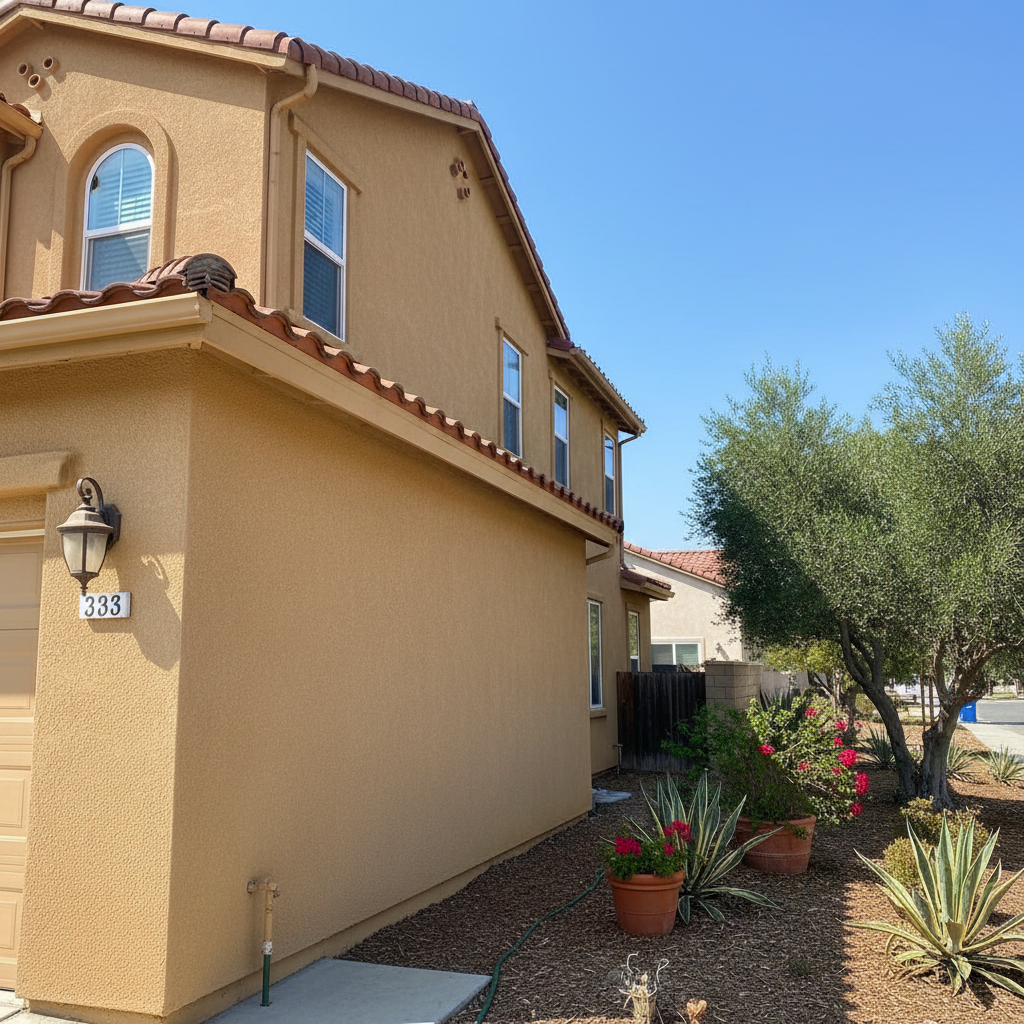
So, your stucco's seen better days, and you're thinking about getting it fixed. Smart move. Letting those cracks or water stains just sit there? That's a recipe for bigger headaches down the road. But here's the kicker: I've watched too many folks right here in Escondido trip up on some pretty common — and honestly, expensive — mistakes when they're trying to get their stucco repaired. My goal is to help you dodge those pitfalls.
Mistake #1: Ignoring the Real Reason for the Damage
This one's probably the biggest, and sometimes it really makes you scratch your head. You spot a crack, you patch it up, and then, a few months later, it's back. Or, even worse, you find a soft spot, you patch it, but the wood underneath just keeps on rotting. Stucco doesn't just decide to fail out of the blue. There's always something causing it.
Is water sneaking in from a leaky window flashing? Is your sprinkler system spraying right onto the wall? Are your gutters overflowing, just dumping water down the side of your house? Maybe you've got some serious soil movement going on, which isn't exactly rare in some of Escondido's older areas with that expansive clay soil. Just slapping a patch on the visible damage without fixing the source is like putting a Band-Aid on a broken arm. It might look okay for a bit, sure, but the problem's still there, quietly getting worse.
Mistake #2: Hiring the Cheapest Bid Without Doing Your Homework
Look, I totally get it. Money talks. Everyone wants a good deal. But when it comes to stucco repair, the lowest price almost never means the best work. I've seen countless homeowners pick the cheapest option, only to call us later to fix a crummy job that gave out within a year or two. And then, well, they're paying twice, aren't they?
A contractor who gives you a super low price might be cutting corners on materials, skipping important prep work, or maybe they just don't really know what they're doing. They might not even be licensed, insured, or have workers' comp, which puts you at huge risk if something goes wrong. Always ask for references, check their license with the CSLB, and make sure they're properly insured. Any legitimate contractor will be happy to show you all that stuff.
Mistake #3: Not Really Understanding the Repair Process or Materials
You don't need to become a stucco guru overnight, but you should have a basic idea of what's going to happen. Are they just patching? Or are they doing a full re-dash? What kind of stucco are they planning to use? Is it a traditional three-coat system, or something else entirely? Different types of stucco need different repair methods and materials if you want them to match up right.
If your older home has traditional cement stucco, and someone tries to patch it with a modern synthetic product without the right prep, it's probably going to fail or look terrible. So, ask questions. A good contractor, like us at Escondido Stucco Solutions, will explain the process clearly and tell you exactly what materials they plan to use and why. If they can't or won't explain it, that's a big red flag.
Mistake #4: Expecting a Perfect Color Match on Patches
This one's tough for people to really grasp, but it's the honest truth: getting a patch to perfectly match your existing, weathered stucco color is incredibly hard. Sometimes, it's just impossible. Your current stucco has been baking in the Escondido sun, getting rained on, and collecting dust for years. It's faded, it's got dirt embedded in it, and its color has changed over time.
Even if we use the exact same color formula, a fresh patch will almost always look different. It's newer, cleaner, and hasn't aged yet. Think of it like trying to mend a faded old pair of jeans with a brand new piece of denim. It's going to stick out. For smaller, hidden repairs, maybe it's not a huge deal. But for larger, more visible areas, you might need to think about a full re-dash or painting the whole wall or house to get a uniform look. Your contractor should tell you this upfront.
Mistake #5: Not Getting Everything in Writing
This might seem obvious, but people still skip it. A handshake deal might feel friendly, but it won't protect you if things go south. Every single detail of the job needs to be in a written contract. This should include:
- A clear description of the work they're going to do.
- The specific materials they'll be using.
- The total cost and when you'll make payments.
- When they'll start and when they expect to finish.
- Warranty information for both the labor and the materials.
- Proof of their license and insurance.
Without a clear contract, if the job isn't done right, or if unexpected costs pop up, you'll have a much harder time sorting things out. Protect yourself and your investment, okay?
Taking a little extra time to understand the problem, check out your contractor, and get all the details squared away can save you a ton of stress and money later on. Don't learn these lessons the hard way.