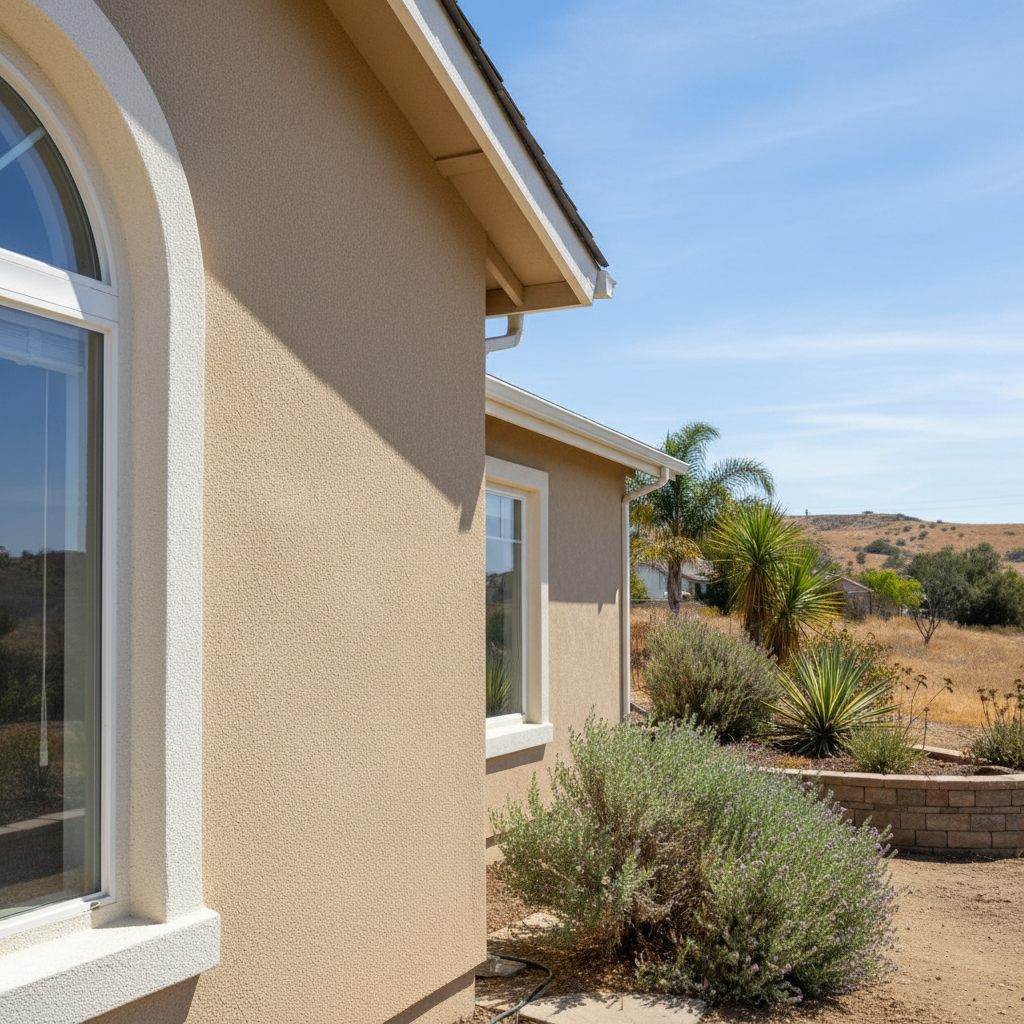
You've got stucco on your home, and that's a smart choice for our climate here in Escondido. It's tough, looks good, and handles our dry, sunny days really well. But "tough" doesn't mean "no maintenance." Like anything else, a little care goes a long way to making sure your stucco lasts as long as it should, protecting your investment.
Extending Your Stucco's Lifespan
The biggest thing you can do to make your stucco last longer is pretty simple: keep it clean and keep it dry. Sounds basic, right? But you'd be surprised how often people overlook these two things. Here in Escondido, we don't get a ton of rain, but when we do, or if you're watering your plants, that moisture needs to drain away properly. Stucco is designed to breathe, not to hold water.
Think about your landscaping for a second. Are sprinklers constantly hitting the side of your house? That's a no-go. Over time, that constant spray can wear down the finish, encourage algae growth, and even lead to bigger issues. Make sure your sprinklers are aimed at your plants, not your walls. Also, keep plants and shrubs trimmed back a few inches from the stucco. Good air circulation is key, and dense foliage can trap moisture against the wall, creating a damp, shady environment that stucco just doesn't like.
Another big one is making sure your gutters and downspouts are actually doing their job. If they're clogged or broken, water's just going to run right down your walls, pooling at the foundation. That's a recipe for disaster, not just for your stucco but for your foundation too. Clean them out regularly, especially after any Santa Ana winds blow a bunch of leaves and debris around.
Regular Maintenance: What You Should Be Doing
Alright, so what does "regular maintenance" actually look like? It's not rocket science, but it does take a little bit of your time.
- Gentle Cleaning: Once a year, maybe twice if your house is under a lot of trees or gets dusty, give your stucco a good wash. Use a garden hose with a spray nozzle, not a high-pressure washer. A pressure washer can damage the finish, especially if it's older or has a softer texture. For stubborn dirt or mildew, use a soft-bristle brush and a mild detergent solution – something like dish soap mixed with water works fine. Rinse thoroughly, of course.
- Inspect for Cracks: Walk around your house every few months. Look for hairline cracks. Most stucco will develop tiny cracks over time; that's normal. But if you see cracks that are wider than a credit card, or if they're forming a spiderweb pattern, or running horizontally or vertically for long distances, those need attention.
- Check for Stains and Discoloration: Are there dark streaks under your windows or where your roofline meets the wall? That usually means water's getting in somewhere it shouldn't. Green or black patches could be mold or mildew, often caused by constant moisture.
- Sealants Around Openings: Check the caulk or sealant around your windows, doors, and any penetrations like dryer vents or outdoor faucets. Over time, the sun and weather here in Southern California can dry out and crack these sealants. If they're failing, water can get behind the stucco, and that's when real trouble starts. Re-caulk as needed with a good quality, paintable exterior caulk.
Warning Signs of Bigger Problems
Beyond the small stuff, there are some clear indicators that your stucco might be in real trouble. Don't ignore these:
- Bulging or Soft Spots: If you push on a section of stucco and it feels soft, spongy, or actually bulges out, that's a serious sign of water damage behind the wall. The lath or sheathing underneath is likely rotting.
- Stains that Won't Clean Off: If you've tried cleaning a stain and it just keeps coming back, or it looks like it's bleeding from inside the wall, you've got a moisture problem.
- Persistent Cracks: We talked about hairline cracks, but if you've got cracks that are getting wider, growing longer, or you can see daylight through them, that's a structural issue that needs immediate attention.
- Stucco Separation: If the stucco is actually pulling away from the wall, or you see pieces flaking off, it's lost its bond. This is often due to extensive water damage or improper installation.
- Efflorescence: This looks like a white, powdery substance on the surface. It's mineral salts left behind when water evaporates from within the stucco. It means water is getting in and then drying out, leaving these deposits.
When to Call a Professional
Look, I'm a big believer in DIY when it makes sense. But when it comes to significant stucco issues, you really need to bring in someone who knows what they're doing. If you're seeing any of those "bigger problem" warning signs I just mentioned, it's time to pick up the phone. Don't wait. A small problem today can turn into a massive, expensive repair tomorrow if left unchecked.
Especially with our climate here in Escondido, where we get those intense dry periods followed by occasional heavy rains, water intrusion can do a lot of damage quickly. You want someone who understands how stucco works, how water moves through walls, and how to properly fix it without just patching over the problem. At Escondido Stucco Solutions, we've seen it all, from homes in the hills of Felicita Park to the older neighborhoods downtown. We know what to look for and how to make sure your stucco is sound.
Getting a professional inspection if you suspect a problem is always a good idea. We can often pinpoint the source of the issue and give you an honest assessment of what needs to be done. It's about protecting your home and helping you feel secure.